AI-Guided Crispr engineering
Higher on-target activity. Lower off-target. In fewer rounds.
Optimize Cas proteins, base editors, and other CRISPR systems for activity, specificity, expression, and thermostability — in parallel. From <25% to 68% on-target editing in three rounds. From 100:1 to 750:1 specificity ratio in two.



CRISPR engineering means optimizing for safety and efficacy at the same time
Mutations that boost on-target activity often increase off-target editing too. Stabilize a Cas variant for delivery, you risk losing catalytic activity. Improve expression, the specificity profile shifts. And large screening campaigns — even ones testing thousands of variants — frequently top out below the threshold needed for therapeutic development.
Enzyme discovery before
Enzyme discovery with Cradle
From marginal editing to therapeutic-grade candidate
Editing performance
On-target editing activity, off-target editing across multiple sites, specificity ratio, PAM compatibility
Expression & stability
Expression yield in production hosts, thermostability (Tm), solvent and buffer tolerance
Delivery & format
Protein size, AAV-compatibility, RNP stability
CASE STUDIES
Wet lab validated.
Trusted in 50+ active programs.


"Through our partnership with Cradle, we are embedding advanced Al directly into how we innovate, enabling our teams to shorten development time and bring real-world biosolutions faster to market."

Claus Fuglsang Crone
Chief Scientific Officer, Novonesis

Unlimited seats
Web Interface
For wet lab scientists
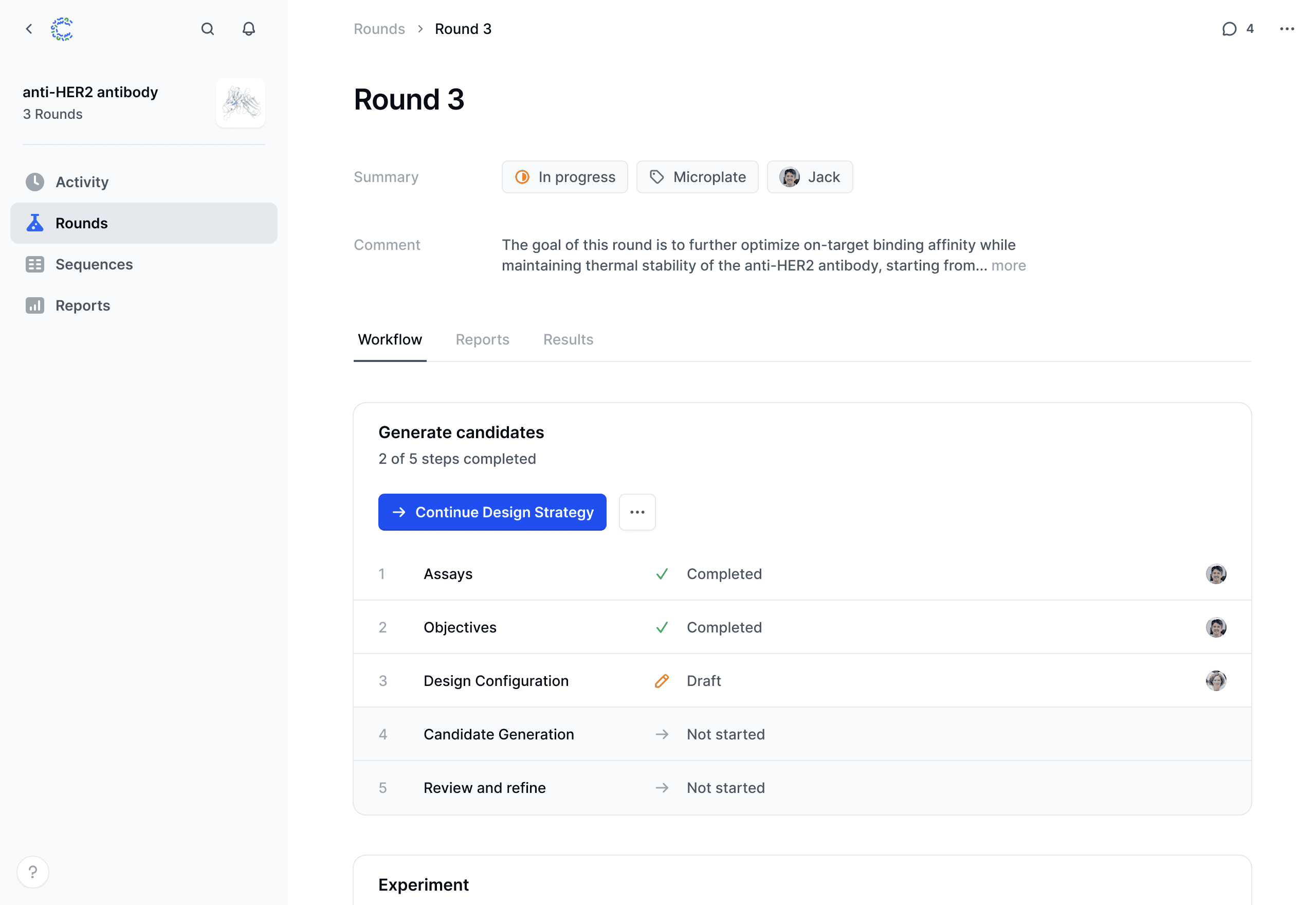
Add your domain expertise and AI generate candidates for lab testing in just a few clicks. Upload experimental results to improve your project-specific AI automatically.

API Access
For computational teams
Run Cradle with an API and scale your expertise without the DevOps overhead. Focus on novel design strategies, not routine requests and endless configuration.

Better enzymes.
Built for your process.
Talk to the Cradle team.