Each round of an ML-guided protein engineering campaign moves through several steps, from raw data to lab-ready candidates. Guided Rounds builds the expertise for running them right into Cradle, in a structured, guided path.



Protein engineering brings together several deep disciplines: wet-lab science, computational biology, and machine learning. A single ML-guided round draws on all of them. Preparing the data, training a model, generating and evaluating sequences, and choosing what goes to the lab, with each step shaping the next. The expertise to sequence those steps well – what to run when, with which defaults, and how each result feeds the next – has until now lived in people's heads.
Guided Rounds builds that expertise into Cradle, so any scientist can run a round from raw data to lab-ready candidates and get predictable outcomes, consistently.
What Guided Rounds is
Guided Rounds brings best practices for running a round into the platform.
When you start a round, you tell Cradle a few things about it–your protein type, whether you have experimental data, and what you want to do, such as designing new sequences from your data or selecting candidates from an existing set. Cradle uses those choices to set up the round and guides you through the steps that follow, with best-practice defaults you can adjust at any point.
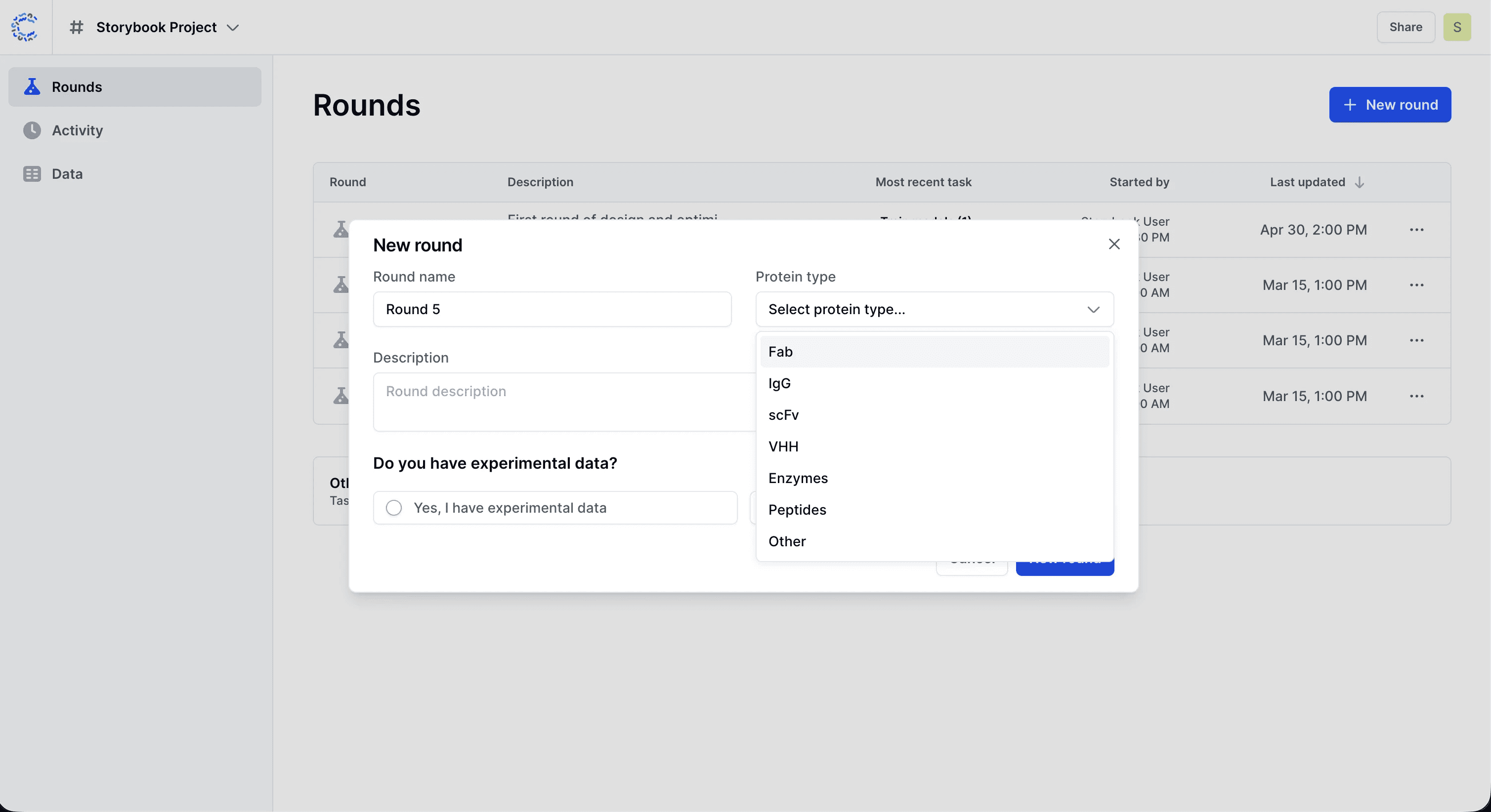
The round setup dialogue.
What Guided Rounds enable
For the scientist running the round, the expertise for structuring a round lives in the platform, so attention stays on the science while Cradle carries the process. New scientists get productive faster, and experienced scientists move through a round without rebuilding its structure each time. The result is more consistent, predictable outcomes from one round to the next.
Teams benefit too. Guided Rounds gives a shared understanding of how rounds are run, standardized approaches across programs, and a traceable record of how decisions were made–useful when handing a project on, presenting to leadership, or picking a campaign back up months later. You can see which trained model produced which candidates, rather than reconstructing it from memory.
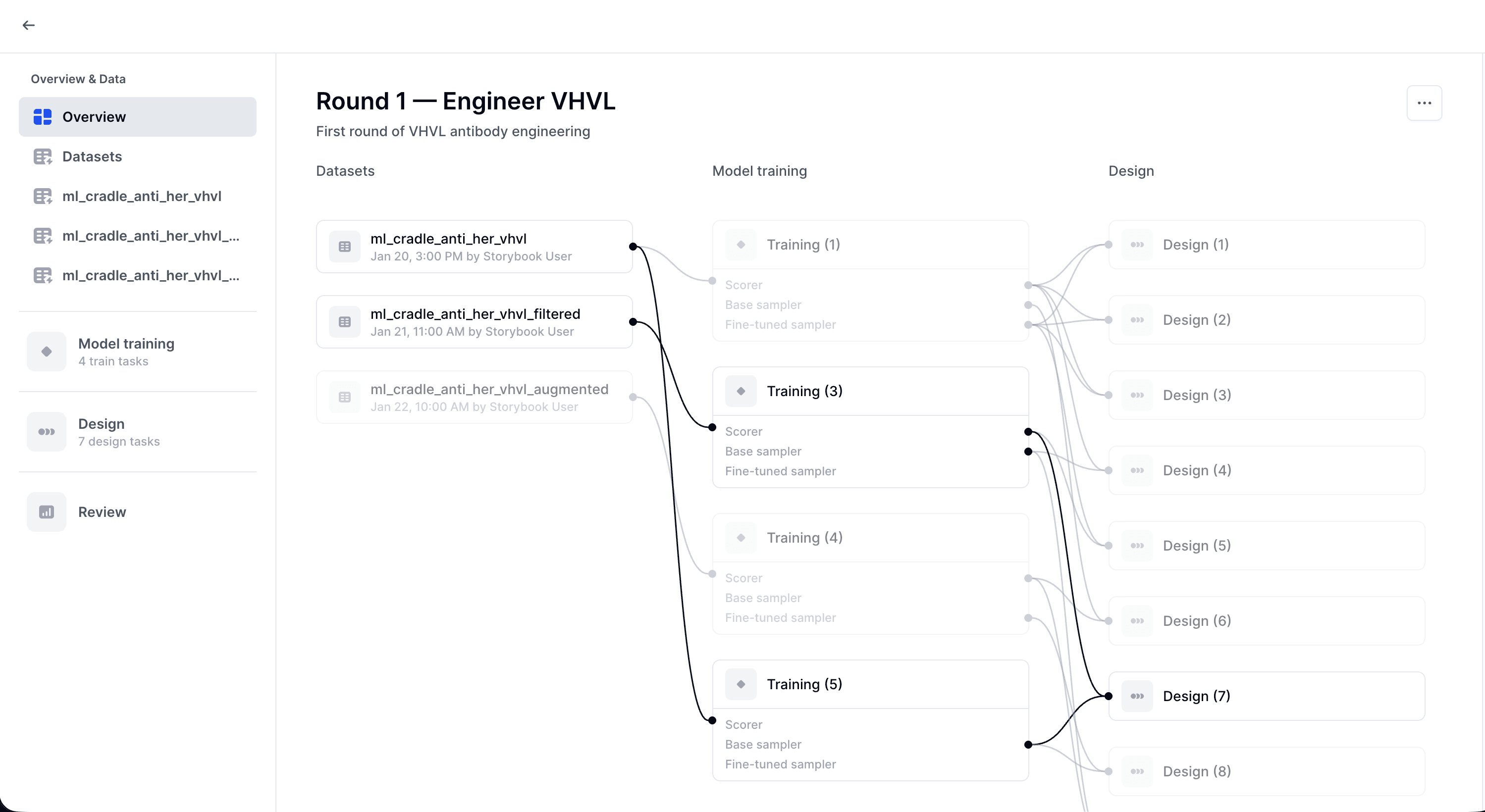
Guided rounds visualizes the decision tree between datasets, model training, design, and review, for better traceability and reproducibility.
Full control when you need it
For scientists who want detailed control over every parameter, you can still run individual tasks with your own configuration at any point. Computational scientists can build on top of Cradle, too, driving rounds through the API and extending them with their own predictors and scoring.
What's next
Guided Rounds is live for all users today, covering the round types our users run most. It's one part of how the Cradle platform takes a program from data to lab-ready candidates, and we'll keep extending the guided path across more of the protein engineering journey.
Read more about Guided Rounds in our documentation.
If you're a Cradle customer, your account team will be in touch with the details. If you're not yet using Cradle, get in touch–we'd be glad to walk you through what this looks like for your programs.
If you want to learn more about the automated machine-learning framework that powers the Cradle platform, you can read our CRADLE-1 whitepaper.
Recent posts
Subscribe and get new posts and updates from Cradle straight to your inbox.