
We put our CTO in a lab coat. Here’s what happened next.
We put our CTO in a lab coat. Here’s what happened next.
Drug discovery accelerates at incredible speed–thanks to lab automation and AI. That means computationalists and experimentationalists must work together more closely. But how can we bring these two different worlds together?
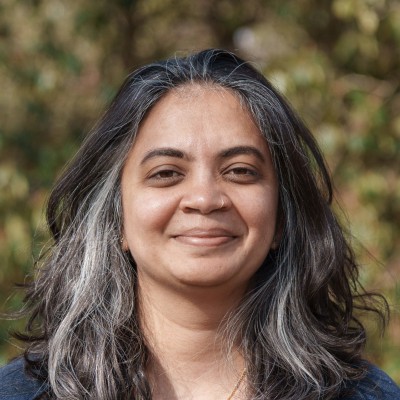
Jinel
Jinel
They had never set foot in a wet lab before. It was May 2025, and 12 of my colleagues at Cradle—our CTO and finance manager included—joined me in the lab for a one-week experiment. This wasn't show-and-tell. They would generate meaningful data, the same data they regularly receive from us to train and validate their machine learning models, and witness firsthand how it's actually created and processed.
We started on Monday and by Wednesday, these extremely fit, athletic colleagues (apparently in Switzerland, they all really hike mountains) were exhausted from standing all day, desperately searching for chairs. They experienced the frustration of machine failures that cost us days of work, no matter how perfectly we followed protocols. I watched an ML engineer "praying" over an experiment, just like we do when rooting for things to work.
For 20 months, I'd been trying to understand how our machine learning systems actually work—peering into what felt like an impenetrable black box of algorithms and predictions. This week taught me something more valuable: the future belongs to scientists who build bridges across different domains, not those who break down walls. It changed how I look at my own career.
The stakes for scientists couldn't be higher. AI shortens drug discovery timelines, but only for companies that figure out how to integrate their computational and experimental teams.
The rest will struggle in the old world of sequential handoffs and siloed expertise.
This is my story as a wet lab scientist and how I had to rethink my own role in the age of AI.
These extremely fit, athletic colleagues (apparently in Switzerland, they all really hike mountains) were exhausted from standing all day
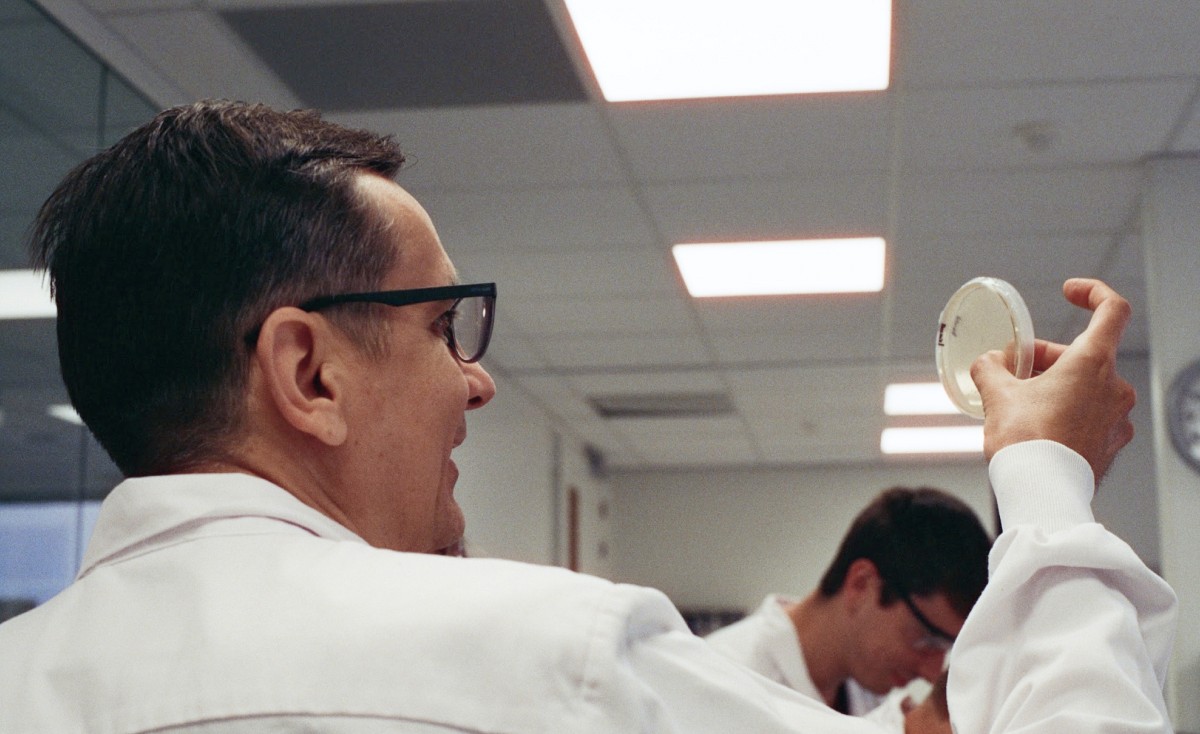
Our CTO Daniel getting very excited about a Petri dish.
Traditional science taught me to master my expertise
Scientists love sharing knowledge through symposia, papers, and general peer-to-peer interaction. But in my career, I also experienced different ways of working, where lab knowledge passes down like a family recipe, but lab scientists stay siloed in the lab. When I expressed interest in learning scripting or bioinformatics, everyone was supportive in principle, but I’d still sometimes hear questions like "You're so good in the lab, why bother?"
At a large company, I tried to learn lab automation. The response was swift: "That's not your role, we have dedicated automation engineers for that."
Those engineers were brilliant but somewhat isolated from bench science. They built technically perfect solutions that missed the mark because they didn't understand our daily realities. For me, this created a big mistrust of automation.
Not because automation was bad. But because it was built in a vacuum. Nobody knew how to bridge the gap.
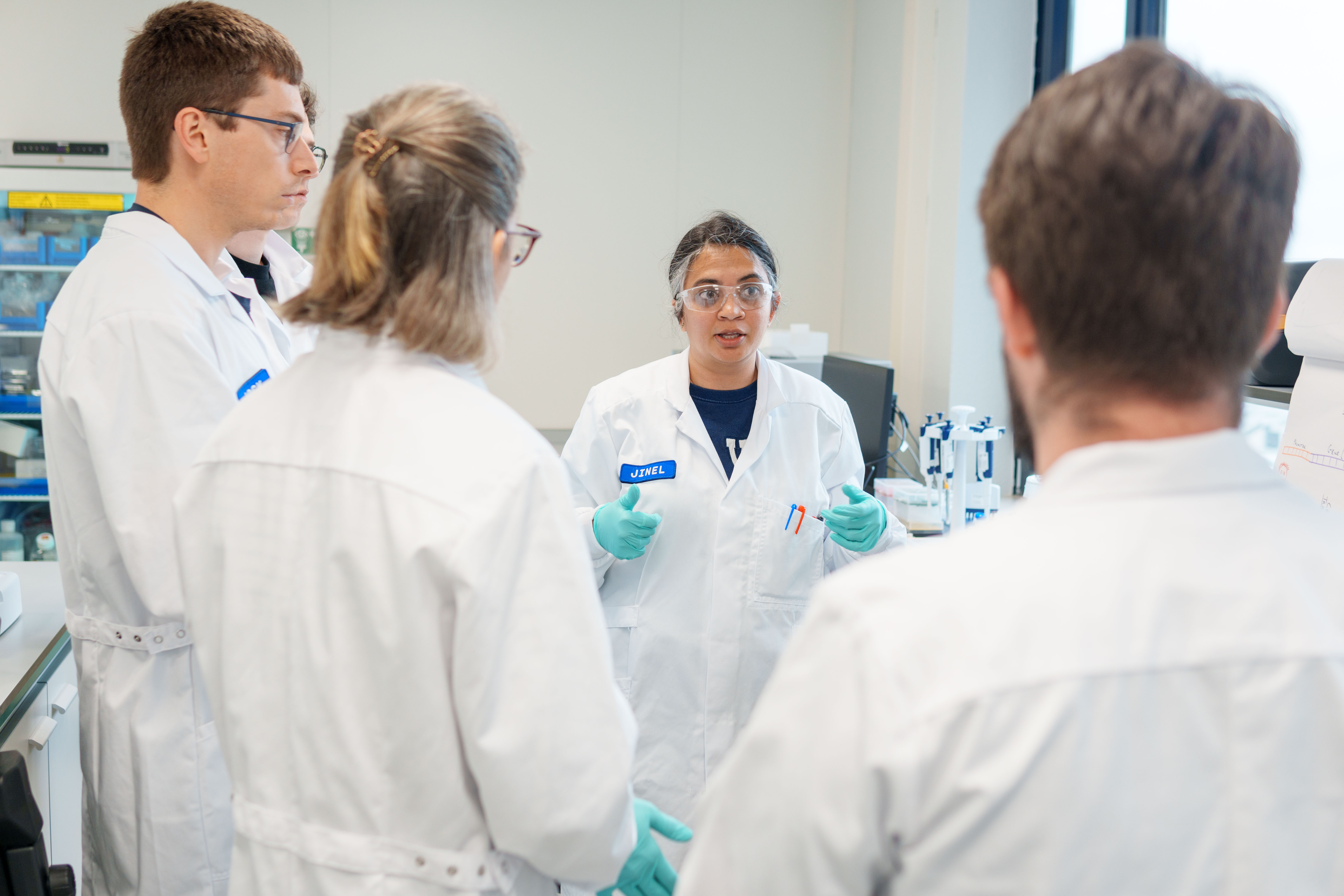
ML engineers are often isolated from bench science.
Then AI arrived–and I questioned my entire career
When I first learned about Cradle's AI-driven approach to protein engineering, I felt three conflicting emotions at once.
If AI designs sequences for my proteins, what's left for me?
1) Part of me panicked: if AI designs sequences for my proteins, what's left for me? Would I become just a technician testing an algorithm's predictions? How could I take pride in variants I didn't design? I'd built my career on those predictions. That was my craft, my identity.
2) Another part of me resisted. I was confident I didn't need AI. I had successful projects behind me. Why trust a machine to do what I'd proven I could do myself?
3) But there was a third feeling, one I was almost embarrassed to admit: relief. AI could search through all possible mutations so I wouldn't have to run endless screening rounds. I could focus on understanding what mutations actually do in vivo, get creative with assays, and identify new targets. Because I actually already knew it's not humanly possible to predict mutations that improve multiple properties simultaneously, or which mutations work synergistically together. And if that's hard for one protein, imagine optimizing six proteins in a pathway.
I realized there was only one way to find out how my role would evolve. I joined Cradle as a scientist.
Modern science throws curveballs: The AI black box challenge
I finally understood I actually had two choices: become an ML expert or learn to work with ML experts.
At Cradle, I wanted to crack the machine learning code. Our ML team is in Zurich; our wet lab in Amsterdam. Their models would generate better protein variants through generative AI but I couldn't see how. Black box: inputs in, results out, process opaque.
My training told me to first understand the mechanism, then trust the output.
But I couldn't peek inside the algorithms, and my experiments couldn't wait. The turning point came when I started planning rounds with the ML team directly. I realized I didn't need to dissect their system. I needed to understand how their work impacts mine. Likewise, the ML team needed to leverage our biological expertise to make sure the models get all the right inputs and metadata (e.g. which framework regions to pick, which regions to keep unchanged, etc.). Ultimately, we share the same goal: better proteins.
I finally understood I actually had two choices: become an ML expert or learn to work with ML experts. The difference is crucial.
Putting ML engineers in lab coats
During our lab week experiment, the same transformation happened for my ML colleagues in real time. As I explained our workflows during daily briefings—the same ones they'd seen in countless presentations—I could see puzzle pieces clicking into place.
They started asking specific questions: "How do we handle DNA synthesis error rates in our training data?" "What's the tradeoff between expression systems and sequence predictions?" "Why pool designs first and deconvolute later if we're training on individual sequences?"
Their in-person experience transformed abstract workflow diagrams into visceral understanding. When they watched machines fail despite perfect execution, they finally understood that sometimes things just don't work, no matter how correctly you follow every step. Biology or maybe more so, the machines behave like a moody teenager who may or may not cooperate on any given day—and our positive attitude in the lab serves as a crucial coping mechanism.
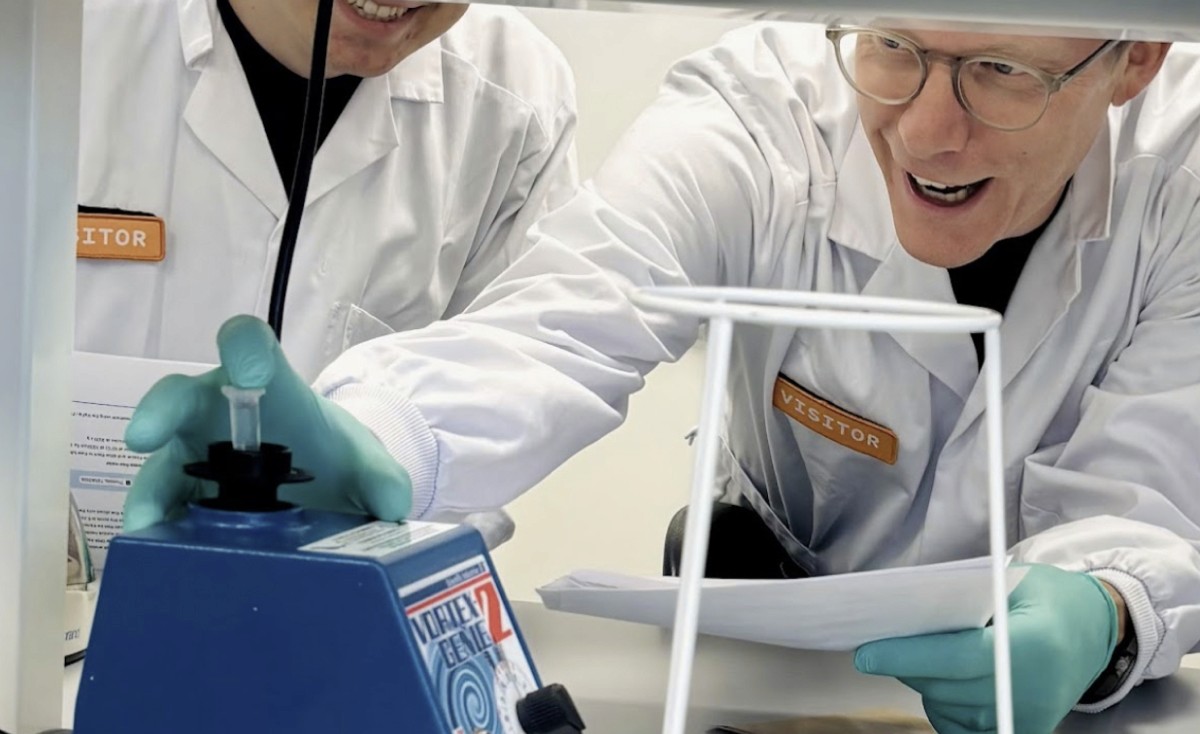
The Vortex was a big hit during Cradle's lab week.
The skills AI can’t automate
I didn’t expect what this week revealed to me. ML engineers and biologists aren't so different after all. But we only complement each other when there’s a bridge between us.
That's where my role evolved. Instead of trying to become fluent in their technical language, I became fluent in explaining why certain biological realities matter for their models. Instead of mastering their algorithms, I mastered helping them understand which lab insights would improve their predictions.
They trust me with lab insights. I trust them to explain their world when I ask. That's the skill AI can't automate.
The path forward is human and more fulfilling than I imagined
A few months after our lab week experiment, those colleagues who were desperately searching for chairs by Wednesday are now our most effective collaborators. Our CTO no longer needs lengthy explanations when experiments fail (sorry, Daniel!), he's felt that frustration firsthand. The ML engineer that once "prayed" over that experiment now instinctively understands why we build redundancies into our protocols.
But I have changed, too.
After two years at Cradle, I've realized my role did need to evolve, but not in the way I feared. Designing libraries was actually a small part of my daily work. Cradle handles that now. Everything else? It's better than ever.
I'm still designing robust assays and reading literature for new targets. But now I'm understanding how Cradle-designed sequences actually work in vivo, attending conferences to share findings I couldn't have generated before, and collaborating to strengthen our data pipeline. I'm doing all the things I never had time for when I was screening thousands of variants to find a few good ones.
I didn't become obsolete. I stopped spending time on the tedious parts and started focusing on what made me want to become a scientist in the first place. The AI didn't replace me, it freed me to finally do the job I always wanted.
I stopped trying to crack every algorithmic code and started focusing on the human code: how to help brilliant people from different worlds work together toward the same goal. The lab week taught us all that understanding each other matters more than understanding each other's tools.
They had never set foot in a wet lab before. It was May 2025, and 12 of my colleagues at Cradle—our CTO and finance manager included—joined me in the lab for a one-week experiment. This wasn't show-and-tell. They would generate meaningful data, the same data they regularly receive from us to train and validate their machine learning models, and witness firsthand how it's actually created and processed.
We started on Monday and by Wednesday, these extremely fit, athletic colleagues (apparently in Switzerland, they all really hike mountains) were exhausted from standing all day, desperately searching for chairs. They experienced the frustration of machine failures that cost us days of work, no matter how perfectly we followed protocols. I watched an ML engineer "praying" over an experiment, just like we do when rooting for things to work.
For 20 months, I'd been trying to understand how our machine learning systems actually work—peering into what felt like an impenetrable black box of algorithms and predictions. This week taught me something more valuable: the future belongs to scientists who build bridges across different domains, not those who break down walls. It changed how I look at my own career.
The stakes for scientists couldn't be higher. AI shortens drug discovery timelines, but only for companies that figure out how to integrate their computational and experimental teams.
The rest will struggle in the old world of sequential handoffs and siloed expertise.
This is my story as a wet lab scientist and how I had to rethink my own role in the age of AI.
These extremely fit, athletic colleagues (apparently in Switzerland, they all really hike mountains) were exhausted from standing all day
Our CTO Daniel getting very excited about a Petri dish.
Traditional science taught me to master my expertise
Scientists love sharing knowledge through symposia, papers, and general peer-to-peer interaction. But in my career, I also experienced different ways of working, where lab knowledge passes down like a family recipe, but lab scientists stay siloed in the lab. When I expressed interest in learning scripting or bioinformatics, everyone was supportive in principle, but I’d still sometimes hear questions like "You're so good in the lab, why bother?"
At a large company, I tried to learn lab automation. The response was swift: "That's not your role, we have dedicated automation engineers for that."
Those engineers were brilliant but somewhat isolated from bench science. They built technically perfect solutions that missed the mark because they didn't understand our daily realities. For me, this created a big mistrust of automation.
Not because automation was bad. But because it was built in a vacuum. Nobody knew how to bridge the gap.
ML engineers are often isolated from bench science.
Then AI arrived–and I questioned my entire career
When I first learned about Cradle's AI-driven approach to protein engineering, I felt three conflicting emotions at once.
If AI designs sequences for my proteins, what's left for me?
1) Part of me panicked: if AI designs sequences for my proteins, what's left for me? Would I become just a technician testing an algorithm's predictions? How could I take pride in variants I didn't design? I'd built my career on those predictions. That was my craft, my identity.
2) Another part of me resisted. I was confident I didn't need AI. I had successful projects behind me. Why trust a machine to do what I'd proven I could do myself?
3) But there was a third feeling, one I was almost embarrassed to admit: relief. AI could search through all possible mutations so I wouldn't have to run endless screening rounds. I could focus on understanding what mutations actually do in vivo, get creative with assays, and identify new targets. Because I actually already knew it's not humanly possible to predict mutations that improve multiple properties simultaneously, or which mutations work synergistically together. And if that's hard for one protein, imagine optimizing six proteins in a pathway.
I realized there was only one way to find out how my role would evolve. I joined Cradle as a scientist.
Modern science throws curveballs: The AI black box challenge
I finally understood I actually had two choices: become an ML expert or learn to work with ML experts.
At Cradle, I wanted to crack the machine learning code. Our ML team is in Zurich; our wet lab in Amsterdam. Their models would generate better protein variants through generative AI but I couldn't see how. Black box: inputs in, results out, process opaque.
My training told me to first understand the mechanism, then trust the output.
But I couldn't peek inside the algorithms, and my experiments couldn't wait. The turning point came when I started planning rounds with the ML team directly. I realized I didn't need to dissect their system. I needed to understand how their work impacts mine. Likewise, the ML team needed to leverage our biological expertise to make sure the models get all the right inputs and metadata (e.g. which framework regions to pick, which regions to keep unchanged, etc.). Ultimately, we share the same goal: better proteins.
I finally understood I actually had two choices: become an ML expert or learn to work with ML experts. The difference is crucial.
Putting ML engineers in lab coats
During our lab week experiment, the same transformation happened for my ML colleagues in real time. As I explained our workflows during daily briefings—the same ones they'd seen in countless presentations—I could see puzzle pieces clicking into place.
They started asking specific questions: "How do we handle DNA synthesis error rates in our training data?" "What's the tradeoff between expression systems and sequence predictions?" "Why pool designs first and deconvolute later if we're training on individual sequences?"
Their in-person experience transformed abstract workflow diagrams into visceral understanding. When they watched machines fail despite perfect execution, they finally understood that sometimes things just don't work, no matter how correctly you follow every step. Biology or maybe more so, the machines behave like a moody teenager who may or may not cooperate on any given day—and our positive attitude in the lab serves as a crucial coping mechanism.
The Vortex was a big hit during Cradle's lab week.
The skills AI can’t automate
I didn’t expect what this week revealed to me. ML engineers and biologists aren't so different after all. But we only complement each other when there’s a bridge between us.
That's where my role evolved. Instead of trying to become fluent in their technical language, I became fluent in explaining why certain biological realities matter for their models. Instead of mastering their algorithms, I mastered helping them understand which lab insights would improve their predictions.
They trust me with lab insights. I trust them to explain their world when I ask. That's the skill AI can't automate.
The path forward is human and more fulfilling than I imagined
A few months after our lab week experiment, those colleagues who were desperately searching for chairs by Wednesday are now our most effective collaborators. Our CTO no longer needs lengthy explanations when experiments fail (sorry, Daniel!), he's felt that frustration firsthand. The ML engineer that once "prayed" over that experiment now instinctively understands why we build redundancies into our protocols.
But I have changed, too.
After two years at Cradle, I've realized my role did need to evolve, but not in the way I feared. Designing libraries was actually a small part of my daily work. Cradle handles that now. Everything else? It's better than ever.
I'm still designing robust assays and reading literature for new targets. But now I'm understanding how Cradle-designed sequences actually work in vivo, attending conferences to share findings I couldn't have generated before, and collaborating to strengthen our data pipeline. I'm doing all the things I never had time for when I was screening thousands of variants to find a few good ones.
I didn't become obsolete. I stopped spending time on the tedious parts and started focusing on what made me want to become a scientist in the first place. The AI didn't replace me, it freed me to finally do the job I always wanted.
I stopped trying to crack every algorithmic code and started focusing on the human code: how to help brilliant people from different worlds work together toward the same goal. The lab week taught us all that understanding each other matters more than understanding each other's tools.
Recent posts
Subscribe and get new posts and updates from Cradle straight to your inbox.


Follow Cradle
Sign up for our newsletter
Built with ❤️ in Amsterdam & Zurich
Follow Cradle
Sign up for our newsletter
Built with ❤️ in Amsterdam & Zurich
Follow Cradle
Sign up for our newsletter